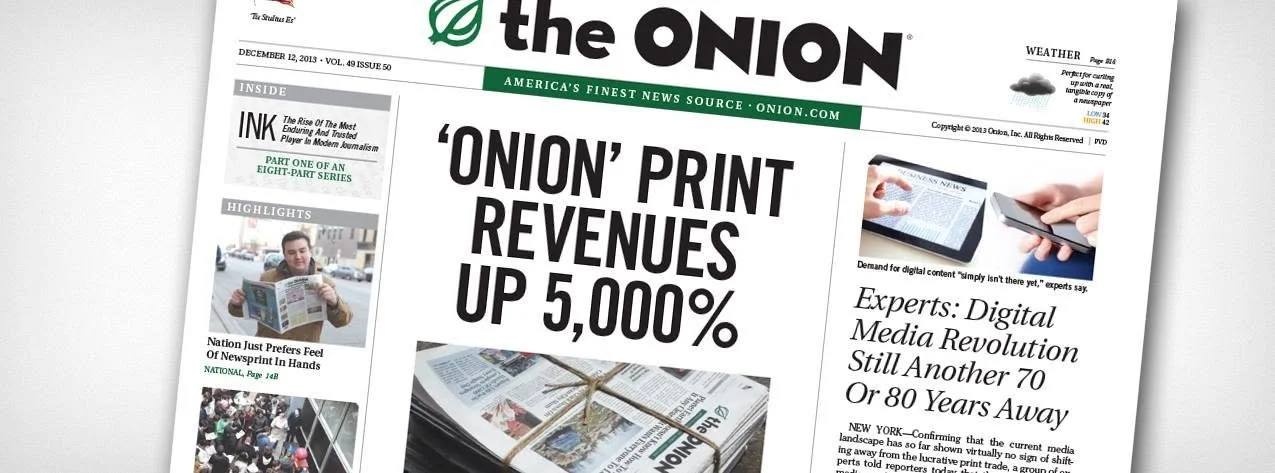
The Onion
Role: Creative Director
Timeline: 2010–2013
Editorial design | Art direction | Motion graphics | Photography | Digital content | Visual satire | Creative leadership | Brand evolution | Video production
Helping a legendary satire brand evolve for the internet
As Creative Director at The Onion, I oversaw design, photography, motion, compositing, and visual production during a transformative period in the company's history.
When I joined, much of the organization was still operating with a print-first mindset. As audiences increasingly moved online, we began rethinking how content was created, distributed, and consumed. The challenge wasn't simply adapting to new platforms—it was preserving the sharp editorial voice and cultural relevance that made The Onion iconic while evolving into a faster, more responsive digital media company.
The work sat somewhere between editorial design, internet culture, comedy writing, production design, and organized chaos.
01Reinventing The Onion for the Internet
The Onion's roots were in weekly print publishing, but the media landscape was changing rapidly. Readers increasingly expected content to react to the news cycle in real time, and social platforms were beginning to reshape how stories spread online.
I helped lead the creative transition from a traditional publishing model to a more agile, digital-first operation capable of responding quickly to current events while maintaining the quality and voice that defined the brand.
This shift required rethinking production workflows, expanding visual systems, increasing output, and developing processes that allowed the team to move faster without sacrificing creative standards. We also moved toward a more timely editorial approach, engaging more directly with breaking news and cultural conversations as they unfolded.
By the end of that transition, content production had increased by more than 300% while the visual quality, humor, and editorial consistency of the brand remained intact.
02When the Joke Escaped the Internet
During this period, The Onion's work regularly broke beyond its own audience and entered mainstream culture in unexpected ways.
Stories were picked up by international news organizations, referenced by politicians, debated by journalists, and occasionally mistaken for real reporting. The publication's influence extended well beyond comedy, becoming part of broader conversations around media, politics, and internet culture.
Notable stories and recurring characters from this era—including Kim Jong Un being named "The Onion's Sexiest Man Alive," the rise of "Diamond Joe" Biden, and other widely circulated satirical pieces—demonstrated the publication's unusual ability to blur the line between absurdity and reality.
The Onion also continued to earn industry recognition during this period, including Webby Awards and widespread recognition as one of the defining voices in modern satire.

02Building an Audience Beyond the Homepage
As social media platforms emerged as major drivers of traffic and audience engagement, The Onion needed to think beyond its website and meet readers where they already were.
I helped expand the brand's visual language across Facebook, Twitter, promotional campaigns, and platform-specific content designed to encourage sharing and engagement. The goal wasn't simply repackaging articles—it was creating content specifically tailored to how audiences consumed media online.
This work helped extend the reach of The Onion far beyond its traditional readership while establishing a stronger presence across emerging digital platforms.
03Video, Motion & New Formats
As digital audiences expanded, so did the demand for new forms of storytelling.
I oversaw and contributed to motion graphics, video production, compositing, visual effects, title treatments, promotional content, and experimental projects that extended The Onion's voice into new formats. The work ranged from supporting editorial content to helping shape larger video initiatives that blurred the line between news, entertainment, and satire.
The challenge was maintaining the publication's distinctive tone while adapting it to mediums that required entirely different creative and production approaches.
04Books & Special Projects
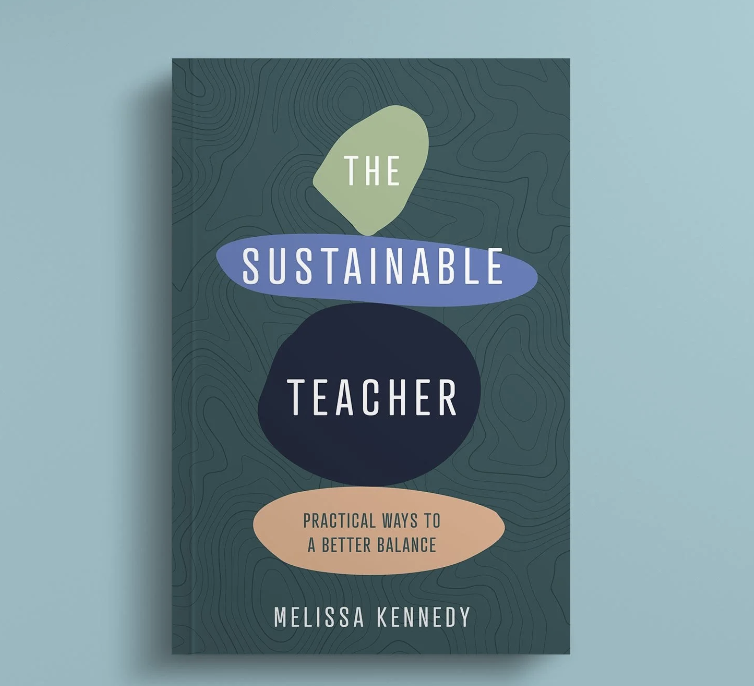
Beyond daily content production, I also contributed to a variety of longer-form projects, publications, and special initiatives that allowed the brand to explore ideas outside the rapid pace of the weekly publishing cycle.
These projects required a different type of creative thinking—balancing the immediacy and irreverence of The Onion with more deliberate storytelling, design systems, and editorial structure.
From books and promotional materials to special editions and experimental concepts, these projects helped extend the brand into new formats while preserving the voice that readers expected.
Outcome
During my tenure, The Daily Show remained one of the most influential and widely discussed media brands in America. The show continued to shape political and cultural conversations while earning recognition across journalism, entertainment, and media industries.
The Daily Show was frequently cited not simply as a comedy program, but as an important source of news and political commentary for an entire generation of viewers. The show's influence extended far beyond television, regularly driving conversations across media, politics, and popular culture.
Awards and recognition during this period included a Peabody Award, Emmy Awards, Critics' Choice Awards, GLAAD Media Awards, and continued recognition as one of the defining voices in modern political satire.

2025
Up Next →